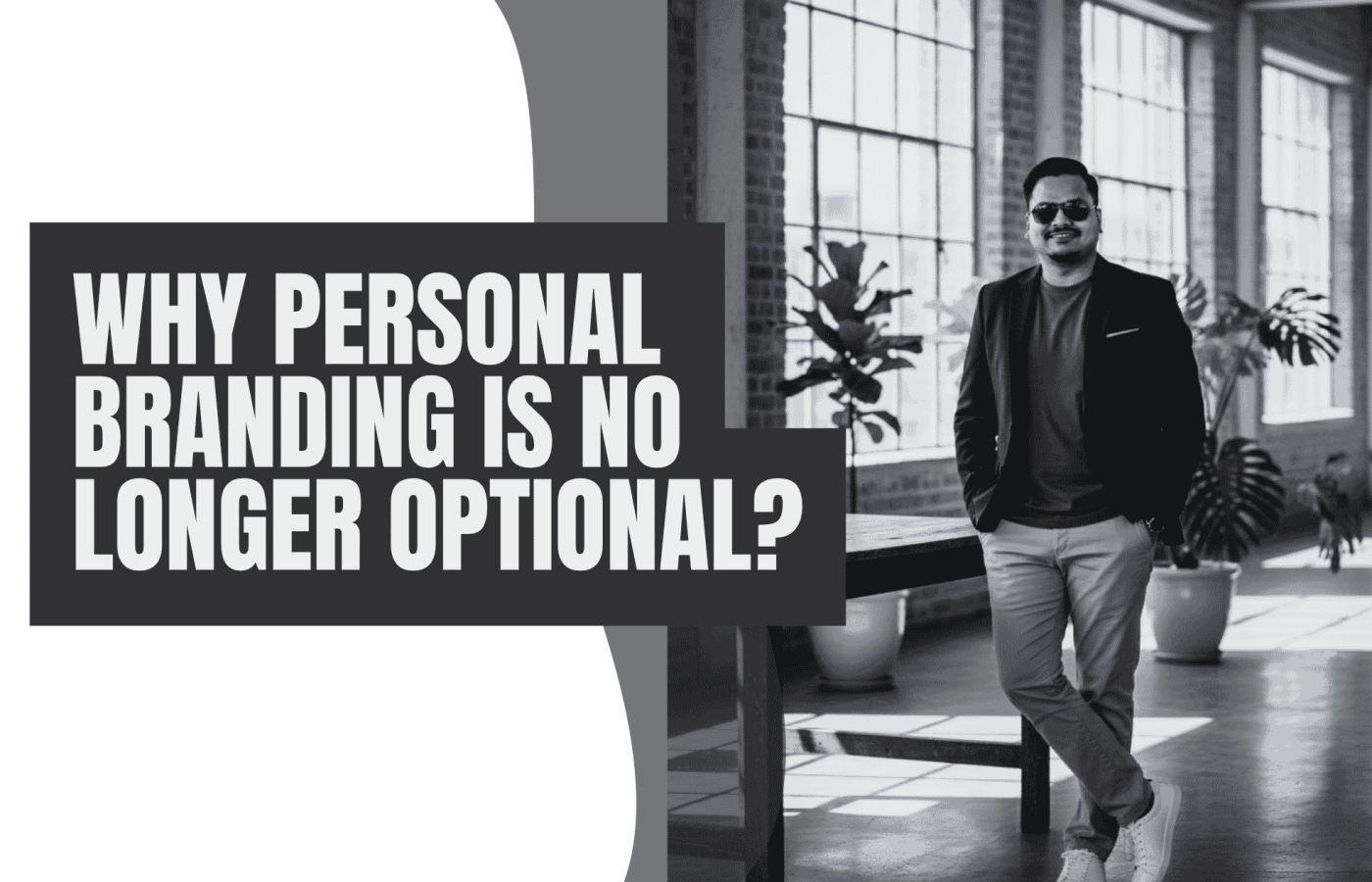
Personal branding is no longer a luxury for celebrities, influencers, consultants, or founders. In 2026, it has become a basic professional survival skill. People search before they trust. They look at your LinkedIn profile before they reply. They check your content before they invite you. They scan your digital footprint before they buy, hire, collaborate, recommend, or invest.
The old career model was built on credentials. The new career model is built on proof. Your degree, job title, and experience still matter, but they are no longer enough by themselves. People want to know what you stand for, how you think, what problems you solve, and whether your public presence matches your private claims.
This is why personal branding is no longer optional. It is the system that connects your real capability with public trust.
The trust gap has changed everything
Every market is crowded. Every profession has more people claiming expertise than the audience can evaluate. This creates a trust gap. Personal branding closes that gap by making your credibility visible before the first conversation.
A strong personal brand does not mean becoming loud. It means becoming clear. It tells people three things quickly: who you help, what problem you solve, and why your perspective deserves attention.
For professionals in Nepal, India, the Gulf, and the wider South Asian market, this matters even more. Many opportunities now begin online. A training client may discover you through Google. A corporate decision-maker may check your LinkedIn profile. A student may find your article before joining your workshop. A journalist may search your name before asking for a quote.
Personal branding is not self-promotion
Many professionals avoid personal branding because they confuse it with showing off. That is a mistake. Personal branding is not about posting every achievement or turning your life into content. It is about strategic reputation design. It is the process of aligning your expertise, values, visibility, and evidence so people understand your professional value.
Self-promotion says, “Look at me.” Personal branding says, “Here is what I solve, here is how I think, and here is why you can trust me.”
The difference is important. A personal brand built only on attention becomes shallow. A personal brand built on usefulness becomes authority.
The four forces making personal branding necessary
1. Search has become the first meeting
Before people meet you, they search you. If they find nothing, they hesitate. If they find confusing information, they move on. If they find clear, relevant, trustworthy content, you enter the conversation with an advantage.
Your website, LinkedIn profile, Google results, articles, videos, testimonials, and public work now act like a digital introduction. They either strengthen trust or weaken it.
2. AI is increasing sameness
AI tools have made it easier for everyone to create content. That means average content is becoming cheaper. Your real advantage is not just information. It is your perspective, lived experience, voice, judgment, examples, and trust.
In a world where anyone can generate a polished post, your personal brand must show what cannot be copied easily: your story, your client experience, your framework, your cultural context, and your decision-making.
3. Careers are becoming opportunity portfolios
People no longer grow only through one job title. They grow through consulting, speaking, teaching, advisory roles, content, products, communities, and partnerships. A personal brand connects these opportunities under one clear identity.
This is especially useful for consultants, trainers, coaches, entrepreneurs, educators, freelancers, and ambitious professionals who want to be known beyond their current organization.
4. Authority now compounds publicly
Every useful article, talk, testimonial, case study, video, and framework becomes a public asset. Over time, these assets build authority even when you are not actively selling.
A strong personal brand is not built in one viral moment. It is built through repeated signals of expertise.
What happens if you ignore personal branding?
If you ignore personal branding, you still have a brand. It is just unmanaged. People will define you based on old posts, weak profiles, random impressions, job titles, or silence. Silence is not neutral. In a digital market, silence often looks like lack of relevance.
The professionals who win in 2026 are not always the most talented. They are the most visible among the credible. Talent matters, but visible trust creates opportunity.
How to start building your personal brand
Start with clarity, not content. Write down the problem you want to be known for solving. Identify the audience you want to serve. Choose three proof points from your experience. Then publish useful ideas consistently around that territory.
Your first goal is not virality. Your first goal is association. When people hear your name, they should connect it with a clear domain. For example: personal branding consultant in Nepal, LinkedIn trainer, leadership coach, youth career mentor, brand strategist, or business storytelling expert.
A simple 30-day personal branding plan
In week one, fix your profile. Update your headline, bio, profile photo, featured links, and website introduction. In week two, publish two teaching posts that solve real audience problems. In week three, share proof: a testimonial, case study, workshop photo, result, or behind-the-scenes learning. In week four, write one long-form article that explains your core point of view.
Repeat this for three months and your digital reputation will begin to feel more intentional, searchable, and trustworthy.
Final thought
Personal branding in 2026 is not optional because trust is no longer automatic. It must be earned, shown, and repeated. Your personal brand is the bridge between your real capability and the opportunities that need to find you.
If you want to go deeper, read What Is Personal Branding in 2026 and How to Build a Personal Brand on LinkedIn.