In an age where everyone is building a personal brand, standing out is no longer about being visible. It is about being remembered, trusted, and followed.
From entrepreneurs and consultants to political leaders and content creators, the race is no longer for attention alone. It is for relevance with credibility and connection.
Yet, despite the explosion of personal branding content, most individuals fall into a predictable trap. They focus on only one dimension of communication.
Some rely heavily on credentials and achievements.
Some lean entirely into emotional storytelling.
Others try to win through humor and relatability.
The result is fragmented perception.
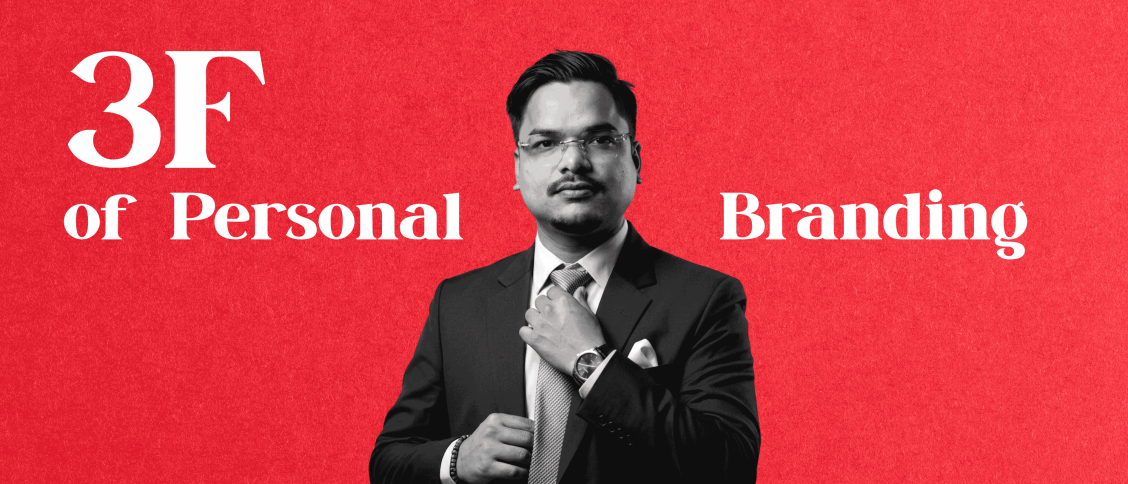
A growing framework in branding circles is helping solve this imbalance. Known as the Three F’s of Personal Branding, it argues that strong personal brands are built at the intersection of:
Facts, Feelings, and Fun
This approach is not just a communication technique. It reflects a deeper understanding of how modern audiences consume, evaluate, and trust individuals in the digital era.
The Shift in Personal Branding
Traditionally, personal branding was about reputation.
A person’s qualifications, job titles, and achievements were enough to establish authority. But digital platforms have fundamentally changed this dynamic.
Today, audiences do not just evaluate what you have done. They evaluate:
- Whether they can relate to you
- Whether they enjoy your content
- Whether they trust your expertise
This shift has made personal branding multidimensional.
A profile that is heavy on achievements may gain respect but fail to engage.
A profile built purely on storytelling may connect emotionally but lack authority.
A profile driven by entertainment may attract attention but struggle to convert into influence.
The Three F’s framework addresses this gap by aligning communication with three core human drivers: logic, emotion, and engagement.
Facts: Establishing Authority in a Noisy World
Facts form the foundation of any credible personal brand. They answer the most critical question in the audience’s mind:
Why should I trust this person?
In an environment flooded with opinions and self-proclaimed experts, evidence has become non negotiable.
Facts in personal branding include:
- Years of experience
- Number of clients or projects handled
- Measurable outcomes and results
- Recognitions, media features, or certifications
For instance, a marketing professional stating, “I help brands grow,” offers little differentiation. However, saying, “I have spent over a decade working with brands across Nepal and managing teams of more than 60 professionals,” immediately adds weight and credibility.
Facts do more than inform. They reduce skepticism.
They also create positioning. A professional who consistently shares insights backed by real data, case studies, or outcomes is perceived as an authority rather than just a participant in the conversation.
However, facts alone are not enough.
Profiles built purely on achievements often resemble digital resumes. They may be respected, but they rarely inspire loyalty or engagement.
Feelings: Building Connection in a Digital Space
If facts build trust, feelings build connection.
Feelings answer a different question:
Why should I care about this person?
This is where personal branding moves beyond credentials and into storytelling.
Audiences today are drawn to authenticity. They want to understand not just what someone does, but why they do it.
For example, a trainer stating, “I conduct workshops on personal branding,” communicates function. But when they add, “I started training because I saw how many talented individuals remain unnoticed simply because they cannot present themselves effectively,” the narrative shifts.
Now there is purpose.
Feelings in personal branding come from:
- Personal journeys and struggles
- Beliefs and values
- Mission driven narratives
- Moments of failure and learning
These elements create relatability.
When people see parts of their own story reflected in someone else’s journey, a connection is formed. That connection often becomes the basis for long term trust and engagement.
Importantly, feelings are not about oversharing. They are about strategic vulnerability. Sharing just enough to humanize the brand while maintaining clarity and purpose.
Fun: Capturing Attention in an Overcrowded Feed
The third element, often overlooked in professional spaces, is fun.
Fun answers a simple but powerful question:
Why should people enjoy following you?
In a world where attention spans are shrinking and content is abundant, engagement has become a currency.
Fun in personal branding does not mean being frivolous. It refers to:
- Personality
- Tone
- Creativity
- Humor
- Unique expression
Consider two ways of communicating the same idea:
“Consistency is important in branding.”
versus
“People change their messaging every week and expect their brand to be remembered. That is not branding, that is confusion.”
The second version introduces personality. It is sharper, more engaging, and more likely to be remembered.
Similarly, a light line such as, “Your logo is not your brand,” when delivered with the right tone, can create both clarity and recall.
Fun humanizes expertise. It makes professionals approachable without diluting their authority.
However, like the other elements, it requires balance. Overemphasis on entertainment can weaken credibility if not supported by substance.
The Power of Integration
Individually, each of the Three F’s serves a purpose. Together, they create impact.
A strong personal brand message typically integrates all three elements.
For example:
“I have spent the last 12 years working with brands, and one thing I have consistently seen is that businesses do not fail because of bad products. They fail because they cannot communicate their value. That is why I focus on branding. And no, posting randomly on social media is not a strategy.”
This single narrative includes:
- A fact that establishes experience
- An insight that creates emotional relevance
- A line with personality that keeps it engaging
Such integration ensures that the message appeals to different segments of the audience simultaneously.
Implications Across Industries
The Three F’s framework is not limited to influencers or content creators. Its relevance extends across sectors.
In Entrepreneurship
Founders who combine data driven insights with personal journeys and engaging communication are more likely to attract investors, customers, and talent.
In Politics
Leaders who balance policy facts, emotional connection with voters, and relatable communication styles often build stronger public trust.
In Corporate Careers
Professionals who present their achievements alongside their values and personality stand out in competitive environments.
In Content Creation
Creators who consistently integrate credibility, relatability, and engagement are more likely to sustain audience growth.
The Evolving Definition of Influence
Influence today is no longer defined by reach alone.
It is defined by a combination of:
- Trust
- Connection
- Recall
The Three F’s framework provides a practical structure to build all three.
Facts ensure that the audience believes you.
Feelings ensure that the audience relates to you.
Fun ensures that the audience remembers you.
Conclusion
As personal branding continues to evolve, the challenge is no longer about being seen. It is about being understood and valued.
The Three F’s of Personal Branding offer a simple yet powerful lens to evaluate and improve how individuals communicate in the public space.
In a landscape where attention is fleeting and trust is fragile, those who can balance facts, feelings, and fun will not only stand out but also sustain their influence.
Because in the end, people do not follow profiles.
They follow people who make them think, feel, and engage.
Work with a Personal Brand Consultant
Get strategic support from Ajay Pandey, Personal Brand Consultant for Nepal and India, focused on visibility, authority, and leads.